Sound Arts & Creative Music Technology at the MHL
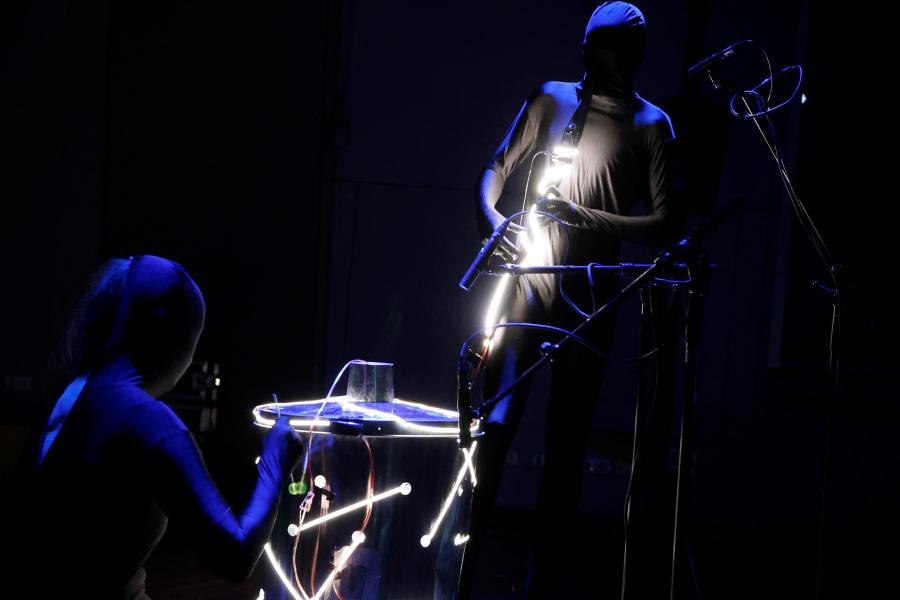
9 compelling reasons
9 compelling reasons to study Sound Arts & Creative Music Technology:
- Artistic specialisation in electronic music, sound art, sound installation, instrument building, intermedia art, and more
- Promotes innovative, experimental and multimedia creativity in music and sound
- Develops solo and ensemble formats
- Is realised on a wide variety of stages, from concert halls to the internet
- Includes intermedia work (with video, light, etc.)
- Provides impetus for creative and novel constellations and collaborations
- Uses smartphones, tablets, video cameras, software, EEGs, EMGs, MIDI controllers, etc. as sound generators, instruments and effects devices
- Constantly evolving in tandem with computer and electrical engineering technologies
- Implements digital, analogue and hybrid methods of sound generation and control
Study
The programme focuses on artistic and musical performance using digital and analogue techniques in the field of electronic music and sound art. It equips students with the skills to use the latest music software and hardware creatively, apply machine learning creatively, build their own electronic musical instruments and produce audiovisual works. It also expands their artistic portfolio and provides a wide range of ideas for further musical development.
The creative use of software, programming, machine learning, internet music practices, electronic and analogue sound generation, sound installation, multi-channel audio, and virtual/augmented reality provides access to current technologies and their creative application in music studies.
Courses of study
Sound Arts & Creative Music Technology is currently offered as an artistic major in the Bachelor of Arts programme in Music Education:
- Future music teachers will be equipped to enable pupils to access contemporary technologies and their creative application in music lessons through the creative use of software, programming, machine learning, internet music practices, and electronic and analogue sound generation.
- Sound Arts & Creative Music Technology aims to familiarise the next generation of music teachers with the breadth of musical practices in electronic music and sound art.
Requirements for the aptitude test for the Bachelor of Arts in Music Education
- Information on the requirements for the aptitude test can be found here.
Curriculum
The artistic major Sound Arts & Creative Music Technology comprises:
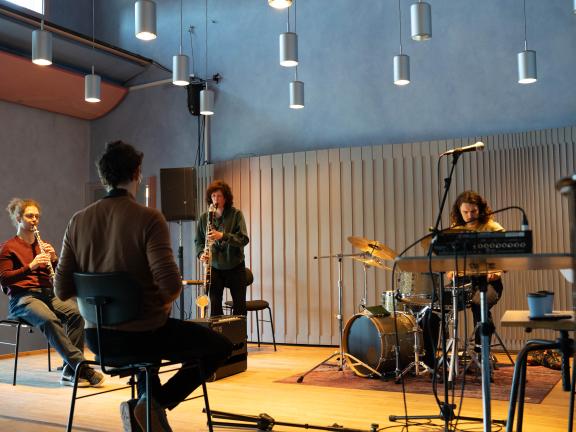
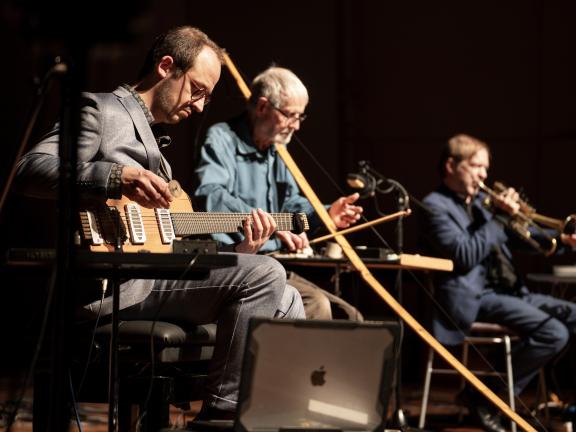
- Digital stage performance solo and in ensemble
- Working with quadraphonic sound, higher order ambisonics and more
- Programming synthesizers, effects, controllers, live sampling, e.g. in Max/MSP, Ableton Live, Pure Data, Faust, Python, etc.
- Studio production (handling microphony, arrangement, editing, mixing, mastering)
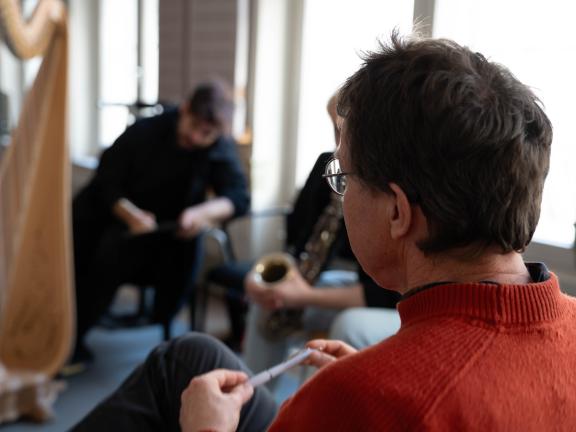
- Group improvisation & sound painting, electroacoustic improvisation
- Making music in digital networks (telematic performance)
- Sound installations
- Creative application of machine learning
- Electronic instrument building (Arduino, Raspberry Pi, Latte Panda Alpha, Jetson Nano, 3D printing, laser cutting, etc.)
- Audiovisual works (live video, augmented and virtual reality, etc.)
- Development and implementation of own multimedia and interdisciplinary concepts
- Diverse performance opportunities, participation in projects, class evenings and collaborations
Sound Arts & Creative Music Technology can also be taken as a specialisation in »Electronic Music & Sound Art« by students from other degree programmes. Information on this can be found here at the bottom of the »Degree Programme Details« page for the respective degree programme.
Courses
Seminars
- MHL-Instrument Builders Ensemble
- Telematic Music Network
- Interactive Music Systems | Max/MSP
- Introduction to Sound Art
- Electronic Studio Methods and Composition
- Advanced Computer-Assisted Composition
- Sound Synthesis Techniques and Creative Coding
- Multimedia Atelier: Light and Video
Class evenings
Individual lessons
Guest lecturers
Guest lecturers are also an important part of the Digital Creation department at MHL. Here is an overview of previous guest lecturers:
2025
- Pierre Alexandre Tremblay
- Alexandra Cardenas
- Pamela Z
- Matthew Goodheart
- David Rotheberg
- Lauren Sarah Hayes
2024
- Joker Nies
- Jeff Snyder
- Sukandar Kartadinata
- Robert Dick
- Seth Josel
- Celeste Betancur
- Lillevan
- David Rothenberg
- Merche Blasco
- Isabella Beyer
- Gesine Danckwart
2023
- Max Eastley
- Axel Dörner
- Miller Puckette
- Alvin Curran
- Nic Collins
- John Bischoff
- Dafna Naphtali
- Constantin Basica
- Till Bovermann
- Alberto De Campo
- Scott Willson
- Hannes Hoelzl
- Cat Hope
- Miya Masaoka
- Tina Tonagel
- Claudia Schmitz
- Claudia Robles-Angel
- Marko Ciciliani
2022
Collaboration
Sound Arts & Creative Music Technology has already collaborated with the following partners and institutions:
- Immersive Media Laboratory of the TH Lübeck
- other Studios
- Nordic Film Festival
- Travemünder Woche